Amazon FBA Prep Requirements in the UK 2026
Reading time: approx. 9 minutes
Amazon’s UK fulfilment centres receive inventory almost entirely through automated scanning. There’s no human double-checking that your barcode matches your listing or that a fragile item has been wrapped properly — if the system can’t verify it in a fraction of a second, your shipment gets flagged, held back, or sent for manual review while your stock sits idle instead of selling.
This guide walks through the core Amazon FBA prep requirements UK sellers need to meet before sending a shipment: barcoding, packaging safety, category-specific rules, and the carton-level details that often get overlooked. We’ll also cover a practical checklist you can run through before every shipment plan is finalised.

1. Barcoding: FNSKU vs manufacturer barcodes
Every unit sent into an Amazon Prep Centre UK needs a barcode that Amazon’s receiving system can scan and match to the correct listing. Sellers generally have two options, and choosing the wrong one is one of the most common causes of receiving delays.
FNSKU labelling: a unique barcode generated per listing, applied over any existing manufacturer barcode. This keeps your stock separate from other sellers’ inventory of the same product and is the safer option for private label and resold goods.
Manufacturer barcodes: only usable where Amazon permits commingled inventory, and increasingly restricted for resellers rather than brand owners. If you’re unsure which applies to your account, it’s worth confirming before your next shipment rather than after it’s been rejected.
Whichever barcode you use, it needs to sit flat, stay fully scannable, and completely cover any competing barcode underneath — two visible barcodes on the same unit is one of the fastest ways to trigger a receiving hold.
2. Packaging safety: polybags and suffocation warnings
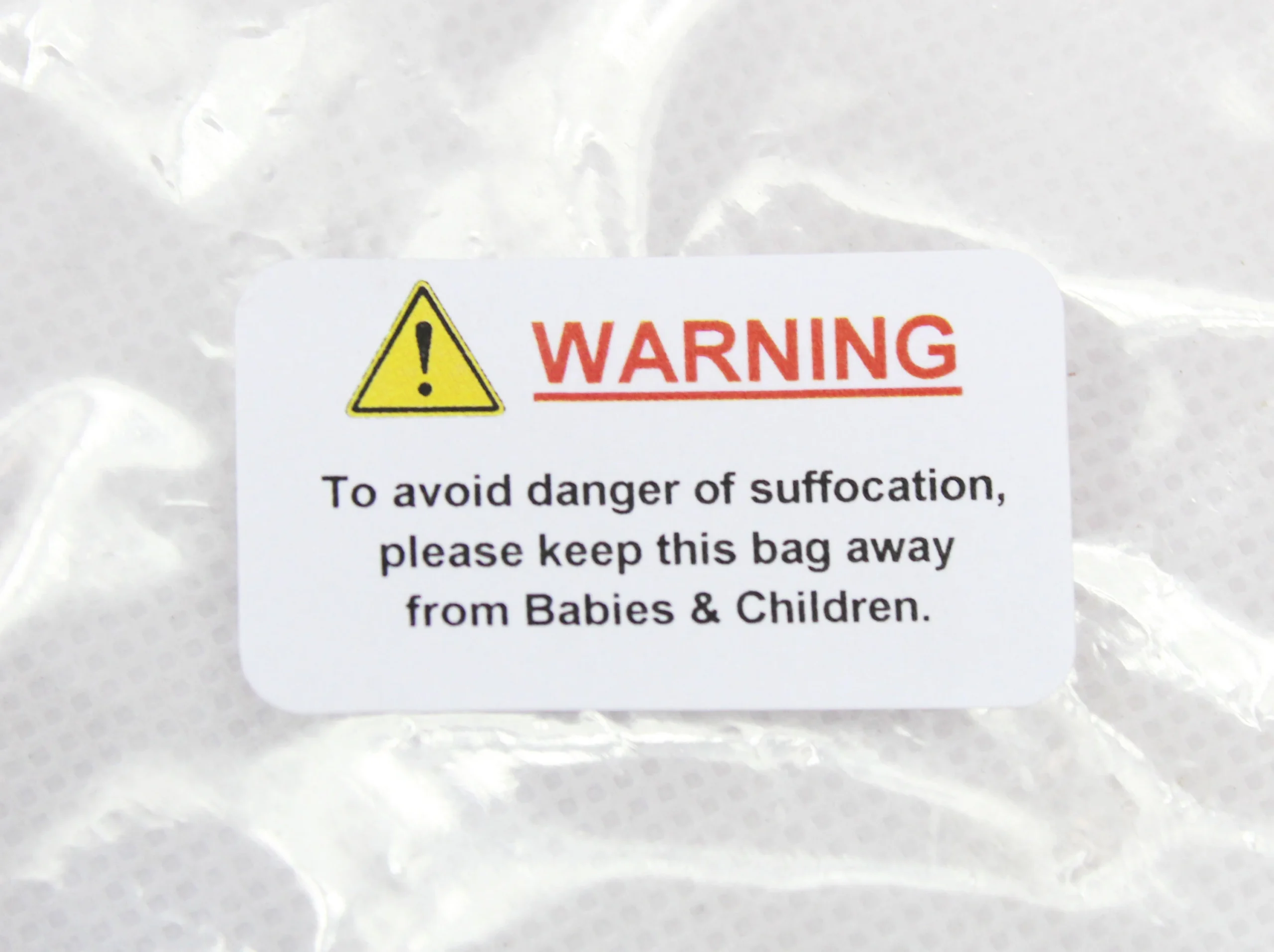
Amazon treats poly bagging as a safety issue, not just a presentation one. Any polybag with an opening larger than roughly 5 inches (about 12cm) when laid flat needs a printed or applied suffocation warning, and that warning has to be legible in English for UK-bound stock.
This is one of the simpler requirements to meet consistently, but it’s also one of the easiest to miss if you’re sourcing packaging materials from overseas suppliers who aren’t working to UK marketplace standards.
3. Expiry-dated products
Food, supplements, cosmetics and any topical product fall under Amazon’s stricter expiry rules. The date needs to be printed clearly, in a format accepted for that category, and visible on both the individual unit and the outer case — a lot code alone isn’t treated as a substitute.
Stock that’s too close to its expiry date when it arrives can be refused at receiving or later marked unfulfillable, so it’s worth checking dates against Amazon’s current policy before boxing rather than assuming last month’s rules still apply.
4. Fragile items and liquids
Fragile products
Glass, ceramics and anything else breakable needs to survive Amazon’s handling environment — conveyor belts, chutes, and the occasional drop. Bubble wrap or an individual protective box is the baseline, and the barcode label needs to sit on the outside of that protection, not underneath it.
Liquids, creams and gels
Anything that can leak is treated as though it will. Depending on the product, that usually means a sealed inner bag plus over-boxing, prepared so the item can withstand being dropped from around three feet onto a hard surface on any side without spilling.
5. Carton-level accuracy
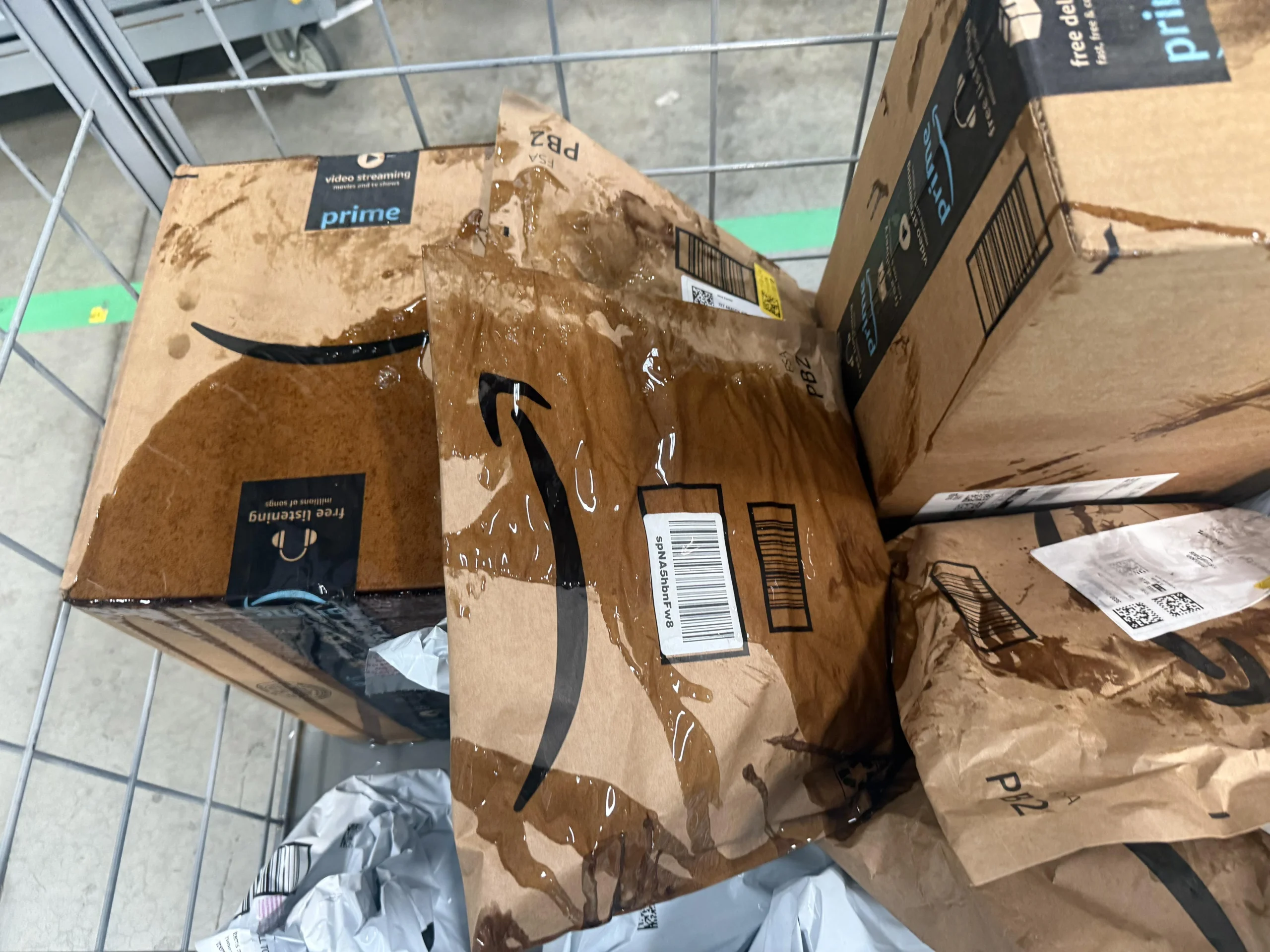
Unit-level prep is only half the picture. Amazon’s system also checks your shipment at the carton level, and mismatches here are just as likely to cause a hold as a labelling error.
Weights and dimensions: should match what’s declared in your shipping plan within Amazon’s tolerance — guessing these numbers is a common source of receiving discrepancies.
Heavy cartons: boxes over the standard manual-handling threshold need the correct heavy-carton label applied, positioned according to Amazon’s current guidance.
Shipping labels: placed flat on a carton side, away from seams and tape, so they scan cleanly on arrival.
6. Pre-shipment compliance checklist
Before finalising a shipment plan, it’s worth running through a short checklist rather than relying on memory:
Is every manufacturer barcode fully covered by a valid FNSKU label?
Do all polybags with a 5″+ opening carry a legible suffocation warning?
Are expiry dates visible, correctly formatted, and within an acceptable window?
Have fragile and liquid items been tested against a three-foot drop?
Do carton weights and dimensions match the shipping plan?
Is the shipping label flat, unobstructed and easy to scan?
7. How FixPrep keeps your shipments compliant
Meeting all of this manually, shipment after shipment, is where most compliance issues creep in — a missed label, an unread expiry date, a carton that’s a few centimetres out. At FixPrep, every unit passing through our Amazon FBA Prep UK service goes through barcode verification, FNSKU labelling, polybagging and a final inspection before it ever leaves our UK facility.
If you’d like to talk through how compliant prep would work for your product range, get in touch and we’ll walk you through it.